Most families visit the salon when something looks wrong - when a fade has grown into a shapeless puff, when split ends have turned into breakage, when nails are chipped beyond acceptable. That reactive pattern keeps everyone in repair mode. A planned schedule, matched to how hair actually grows and how skin actually renews itself, changes the math: each visit builds on the last instead of undoing damage from the gap. This guide covers every service - haircuts, color, nails, and facials - for every person in the household, from toddlers getting their first trim to seniors with specific care needs that most salon frequency guides completely overlook.
Why a Salon Schedule Actually Saves Money and Grows Better Hair
Human hair grows roughly 0.5 inches per month - about 6 inches per year, according to the American Academy of Dermatology. That's a steady, predictable rate, which means visit timing isn't guesswork. At that growth rate, a fade that looked sharp on Monday starts losing its edge within two to three weeks. A mid-length trim left for four months instead of two develops split ends that have to be cut off rather than maintained, meaning more length is removed at each catch-up appointment than would have been needed with regular visits.
The biology matters here. At any given time, roughly 85 to 90 percent of scalp follicles are in the anagen phase - the active growth phase, which lasts anywhere from two to seven years. Regular trims protect the investment in that growing length. They don't slow growth, despite a common belief to the contrary. They eliminate the split end that would otherwise travel up the shaft and force a more aggressive cut later.
The same logic applies to nails and skin. Gel that lifts at the edge picks up moisture and bacteria. Skin that goes months between professional treatments loses the compound benefit of sessions timed to the natural renewal cycle. Proactive scheduling - booking the next appointment before things look bad - is almost always cheaper and more effective than reactive damage control.
Toddlers and Young Children (Ages 0-5): First Cuts, Comfort, and How Often to Return
Baby hair grows more slowly and unevenly than adult hair. Most children under two need a haircut only every three to four months. The priority at this stage is not precision styling - it's a short, positive experience that builds familiarity with the salon environment. Sessions should be brief. A toddler who sits still for ten minutes has had a successful appointment, and pushing past that threshold rarely ends well for anyone involved.
Between ages two and five, growth picks up and the difference between a fresh cut and an overgrown one becomes more visible. Many children in this age group settle into a rhythm of every eight to twelve weeks for most lengths. Children with very fine or very curly hair may need attention sooner because texture changes faster when the cut grows out. There are no nail or facial schedules needed for this age group, but getting children comfortable in the salon chair early pays off for years of easier appointments ahead.
Parents should book a dedicated child's appointment rather than trying to squeeze the cut in during their own service. A stylist who can work at a child's pace makes the difference between a child who tolerates the salon and one who actually looks forward to going.
School-Age Kids (Ages 6-12): Short, Active, and Growing Fast
Children in this age range are active, often outdoors, and hard on their hair. Short styles - cropped cuts, tapered sides - need attention every six to eight weeks to stay shaped and manageable. Mid-length hair, roughly chin to shoulder, holds its form longer: every eight to twelve weeks is a practical range. Long hair that the child wants to keep growing can often go four to six months between trims, especially if it's worn up frequently and sees minimal heat or friction from rough handling.
A useful guide for parents: if the child comes home from school looking nothing like they did leaving the salon, it's time to return. That visual cue lines up reasonably well with the six-to-twelve-week range for most styles.
One edge case worth noting - children with chemically relaxed or heat-styled hair, which is less common at this age but not rare, need conditioning attention in addition to regular trims. The same professional deep conditioning rhythm that applies to adult processed hair - every three to four weeks - applies here too. The hair doesn't know how old the person wearing it is.
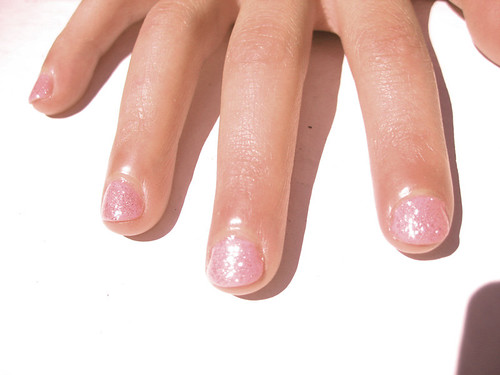
Nail care at this age is mostly home maintenance: keeping nails clean and properly trimmed. Some families bring children in for polish on a special occasion, which is fine. Regular professional nail appointments aren't typically necessary until the teen years.
Teenagers: Style Drives the Schedule
Teens are often the most demanding salon clients in a household, and there's a biological reason for it. Hair grows fastest between ages 15 and 30, which means teenagers genuinely do outgrow their cuts faster than older adults. A fade that holds for three weeks on a 45-year-old may look noticeably grown out in two weeks on a 17-year-old.
Teen boys maintaining tight fades or tapers should plan visits every two to four weeks. The shorter and sharper the fade, the shorter the interval - there's no way to stretch a number-one fade to six weeks and still look intentional. Teen girls with shorter bobs or shaggy crops typically need trims every four to six weeks. Longer teen hair - ponytail length and beyond - can stretch to eight to twelve weeks between cuts if no chemical services are involved.
Color changes the entire calculation. If a teen is getting root touch-ups on single-process color, the schedule follows the same logic as adults: every four to six weeks as roots grow in at roughly 0.5 inches per month. Balayage and highlights are lower maintenance and typically return every eight to twelve weeks. Parents managing a teen's color appointments should factor in that lightening adds conditioning demands - a professional deep treatment every three to four weeks helps maintain hair condition between color services.
For teen girls interested in gel manicures, the same two-to-three-week return window applies as for adults. Setting that expectation early - gel is a commitment to a follow-up appointment, not a one-time treat - prevents the frustration of lifting polish going untended for weeks at a time.
Women's Hair: A Frequency Framework by Length, Color, and Texture
The right interval depends on three variables: length, whether color is involved, and how much heat or chemical processing the hair sees regularly.
Women with medium-length hair - shoulder to collarbone - should trim every six to eight weeks. At that length, ends are visible and split ends show quickly, especially with daily styling. Long hair in good condition can reasonably stretch to eight to twelve weeks, or even three to six months for someone actively growing it out who is consistent about conditioning and wears protective styles often. Shorter bobs and pixie cuts need reshaping more frequently - every four to six weeks minimum - because the structure of the cut depends on clean lines.
For color clients, timing splits by service type. Root touch-ups on single-process or full-color need to return every four to six weeks, simply because 0.5 inches of new growth per month becomes visible at the root line in most shades by week four. Balayage, highlights, and techniques that blend at the root are more forgiving - eight to twelve weeks is a comfortable range before visible regrowth becomes distracting.
Color-treated, chemically relaxed, or frequently heat-styled hair benefits from a professional deep conditioning or hair spa treatment every three to four weeks. These treatments replenish moisture and strengthen the cuticle between color appointments, extending the life of both the color and the overall condition of the hair. This is basic upkeep for hair under regular chemical or thermal stress - not an optional extra for high-maintenance clients.
Men's Hair: From Tight Fades to Longer Styles
Men's haircut frequency varies more than any other demographic because the range of styles is wide. A man with a tight fade on the sides and a sharp crop on top is dealing with a cut that shows every week of growth. Fades, tapers, and crew cuts need reshaping every two to three weeks. The precision of the line-up and the gradient of the fade both deteriorate noticeably within that window - there's no way to stretch a structured fade to a month and still look clean.
Men with medium-length, less structured hair can comfortably go four to six weeks. Men with longer hair, worn loose or pulled back, are in a similar position to long-haired women: eight to twelve weeks between trims is reasonable if the hair is in good condition. Men who color - whether covering gray or maintaining a specific tone - follow the same four-to-six-week root schedule. Men with chemically processed hair or who use heat tools regularly should consider a conditioning treatment on the same three-to-four-week schedule used for women with processed hair.
Nails for the Whole Family: Manicure and Pedicure Frequency
Nail care frequency depends on two things: the service type and how hard the hands and feet actually work each day.
Traditional polish chips with daily hand use - dishes, typing, cleaning - often within five to seven days, though exact wear time varies with how frequently hands are washed and the demands of daily tasks. That's not a flaw in the service; it's the nature of the product. Gel manicures last two to three weeks before lifting or visible chipping makes them look untidy. The lifting matters beyond aesthetics: a gel edge that separates from the nail traps moisture, which creates conditions favorable to bacterial or fungal growth. The two-to-three-week window is practical maintenance.
Pedicures follow a different rhythm. For most people, every four to six weeks keeps heels smooth and polish fresh. During sandal season - or for anyone on their feet all day in hard-soled shoes - shortening that interval to every two to three weeks maintains skin condition more effectively than waiting until heels become rough enough to crack. Cracked heels are significantly harder to correct than they are to prevent with regular care.
Children generally don't need regular professional nail appointments. Teens who want regular gel manicures should understand the return commitment before starting. Seniors with specific health conditions face a different calculation entirely, covered in the next section.
Skin and Facials: Syncing Appointments to Your Skin's Natural Renewal Cycle
Skin cells renew naturally on a cycle of roughly 28 to 40 days. This is why most estheticians recommend professional facials every four to six weeks - the timing supports each renewal cycle rather than working against it. A facial timed to the end of a renewal cycle removes dead skin that accumulated during it and prepares the surface for the next round. Booking less frequently than that means some of that benefit is lost to cumulative buildup between visits.
Skin type adjusts the interval. For acne-prone skin during active breakouts, more frequent facials - every two to three weeks - can accelerate clearing by keeping congestion managed between cycles. Sensitive skin runs in the other direction: every six to eight weeks prevents the over-stimulation that can trigger reactivity and redness. Pushing sensitive skin through facials too often can worsen the problem it's meant to address.
Adults over 50 experience a notable slowdown in cell turnover - the renewal cycle can stretch to 60 days or more, compared to around 28 days in younger adults. That slower turnover means dead skin accumulates on the surface longer. More frequent facials, roughly every three to four weeks, compensate for that change. This isn't about reversing aging - it's maintenance calibrated to what the skin is actually doing at that stage of life.
Teens with active acne can benefit meaningfully from professional treatments starting in the mid-to-late teen years. Professional facials are not appropriate for young children.
Senior Care: Why Professional Visits Matter More With Age
Mainstream salon frequency guides almost never address seniors as a distinct group, but their needs are specific and, in some cases, medically significant.
For hair, general adult frequency guidelines apply, adjusted for changes in texture and density that come with age. Gray hair and fine, aging hair often behave differently than the client's hair did at 35, and a stylist experienced with those changes is worth seeking out. Scalp health becomes more important as hair naturally thins - professional attention to the scalp condition matters alongside the cut itself.
Skin care is where the biology is most pronounced. The cell turnover slowdown to 60 days or longer means that facials timed to the three-to-four-week range deliver benefits that younger clients don't need as urgently. Seniors who build a consistent facial schedule often see better results than those who begin late and try to address years of accumulated change in a handful of appointments.
Nail care carries safety considerations that most people don't consider until a problem arises. Seniors with diabetes, peripheral circulation issues, or other conditions that affect healing face elevated infection risk from DIY pedicures. Small nicks, cuts, or pressure on skin with compromised circulation can become serious complications quickly. For these clients, consulting a healthcare provider or podiatrist before beginning any pedicure routine is an important first step - those with higher-risk conditions such as neuropathy or significant vascular disease may be directed toward medical pedicures performed in clinical settings rather than standard salon services. When salon pedicures are appropriate, a licensed technician working with proper sterilization protocols provides a safer standard than home care, and is also trained to notice changes in nail or skin condition that can signal underlying health concerns.
Building Your Family Salon Calendar: How to Bundle Appointments and Stay on Schedule
The single biggest reason families fall off their salon schedule is logistics. Booking one appointment is straightforward. Coordinating four to six people across multiple service types, different intervals, school calendars, and work schedules becomes complicated enough that most families default to reacting instead of planning.
The fix is to build the calendar once and anchor it to time markers that already exist. Back-to-school in late summer is the most useful family anchor: schedule haircuts for every child and every parent in the two weeks before school starts, then count forward by each person's interval before leaving the salon and book that next appointment on the spot. Holiday photos, school picture day, and spring break are secondary anchors that work the same way - use the event to trigger the booking, then build the next appointment into the calendar before leaving.
Look for service combinations that let family members share a trip. A parent getting color - which includes processing time sitting in the chair - can overlap with a child's haircut in the next station. A teen's gel fill and a parent's facial can often be scheduled back-to-back at a full-service salon, reducing the number of separate trips per month. A salon that handles hair, nails, and skin under one roof makes this kind of bundling practical in a way that three separate specialty locations don't.
Write the schedule down in a shared place - a family calendar app works well. Set the next appointment before leaving the salon each time, so scheduling never starts from scratch. Many salons will hold a standing appointment series on request: weekly for the teen with the fade, monthly for a parent's facial, every few months for the youngest child's trim. Use standing appointments when they're available. The schedule only delivers results if it actually exists on the calendar.
Ready to book your visit?
Book an Appointment